
Overview of Myasthenia Gravis
An Autoimmune Disease
Myasthenia Gravis (MG) results in progressive skeletal muscle weakness. It is one of many autoimmune disorders. An autoimmune disorder is a condition that occurs when the immune system mistakenly attacks and destroys healthy body tissue. There are more than 80 different types of autoimmune disorders.
Muscle fibers that have striations or bands are connected to the bone. Myasthenia gravis often causes rapid fatigue and loss of strength after physical exertion. At early stages of the disease, MG affects muscles that control eye movement, muscles that control chewing and swallowing, along with muscles that control facial expression. If left untreated for a long period of time the disorder may affect muscles that control breathing and lead to the condition of acute respiratory failure.
There are four kinds of Myasthenia Gravis – classified according to which skeletal muscles are affected:
1) Generalised Myasthenia Gravis
- Occurs within a year of onset
- Approximately 85-90% of patients develop this type of Myasthenia Gravis
- It is characterized by weakness of the arms and legs
2) Ocular Myasthenia Gravis
- Approximately 10-15% of patients have weakness only in muscles that control eye movement
- It leads to abrupt onset of weakness/fatigability of the eyelids.
- Can cause 'Ptosis' - drooping of the upper eyelid.
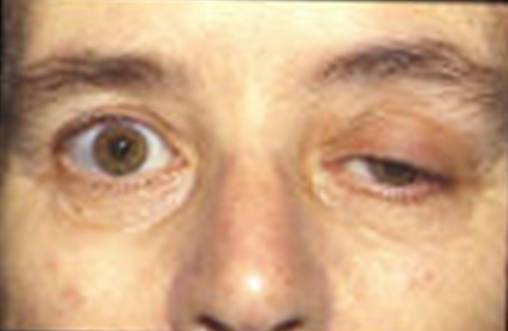
Image courtesy of
https://commons.wikimedia.org/wiki/Image:Myasthenia.jpg
Permission released under the GNU Free Documentation License

3) Congenital Myasthenia Gravis
- An inherited condition, caused by a genetic defect
- Develops shortly after birth and causes generalized symptoms
4) Transient Neonatal Myasthenia Gravis
- A temporary condition
- Develops in 10-20% of infants born to mothers who have MG.
- Caused by circulation of the mother’s antibodies through the placenta
- Lasts as long as the mother’s antibodies remain in the infant.
Incidence and Prevalence
Myasthenia gravis affects approximately 2 out of every 100,000 people and can occur at any age. It is most common in women between the ages of 18 and 25. In men, the condition usually develops between 60 and 80 years of age.
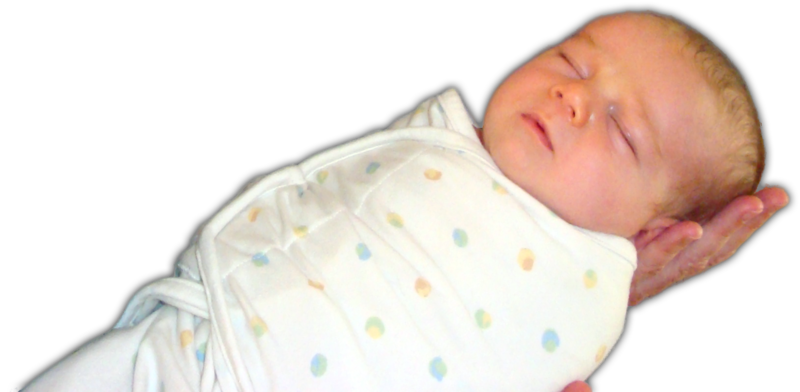
Approximately 20% of neonates born to mothers with myasthenia gravis have transient, or sometimes persistent MG. This autoimmune disease may exist in conjunction with immunologic and thyroid disorders.
Image Courtsey of
https://commons.wikimedia.org/wiki/File:3_week_old_swaddled_infant.png
This image is in the public domain and thus free of any copyright restrictions.

Prognosis for Myasthenia Gravis
The outlook for individuals with MG is bright. They can expect to lead close to normal lives. Some patients with the condition may go into temporary remission and so muscle weakness may disappear and ultimately medications can be discontinued.
In other cases however, respiratory failure can occur due to the severe weakness of MG, requiring immediate medical care.
Contact
Search site
Did you know...
MG is more common in families with other autoimmune diseases. A familial predisposition is found in 5% of the cases.